
Gambia is changing its numbering plan!

Since September 4, 2026, all Gambian phone numbers have changed from 7 to 9 digits. This historic reform, announced by the country's telecommunications regulator, will affect anyone with a Gambian number in their contacts. Here's everything you need to know to avoid being caught off guard.
Why the change?
The Public Utilities Regulatory Authority (PURA), the Gambian telecommunications regulator, justifies this reform with a simple reason: the country no longer has enough available numbers!
With the continued growth of mobile subscriptions and digital services, the old 7-digit system could only offer about 10 million possible combinations. The new 9-digit format increases this capacity to one billion numbers, more than enough to anticipate future population growth and the rise of digital technologies.
PURA specifies that it carried out this reform in consultation with the International Telecommunication Union (ITU) and the regulators of the ECOWAS region, several neighbouring countries — Ghana, Senegal, Nigeria, Ivory Coast — having already carried out a similar migration in recent years.
How does the new format work?
The principle is simple: each existing 7-digit number remains unchanged, but receives a 2-digit prefix, specific to each operator, added immediately after the initial zero (or after the international dialing code +220 for calls from abroad).
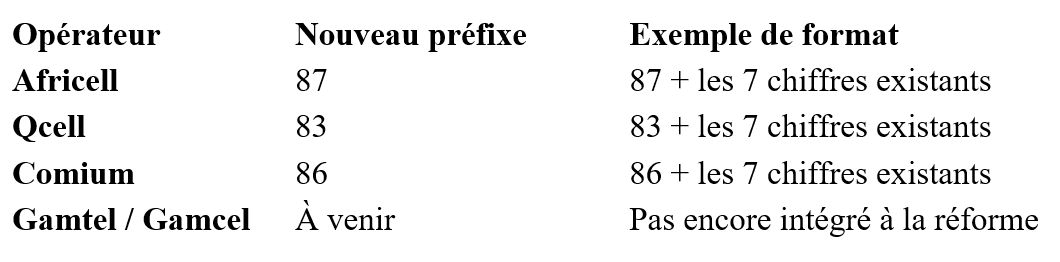
In practice it's very simple: +220 + operator prefix + regular number
For Africell numbers:
A number previously written as +220 7xx xxxx becomes +220 87 7xx xxxx.
A number previously written as +220 2xx xxxx becomes +220 87 2xx xxxx.
A number previously written as +220 4xx xxxx becomes +220 87 4xx xxxx.
For QCell numbers:
A number previously written as +220 3xx xxxx becomes +220 83 3xx xxxx
A number previously written as +220 5xx xxxx becomes +220 83 5xx xxxx
For Comium numbers:
A number previously written as +220 6xx xxxx becomes +220 86 6xx xxxx
Good news for subscribers: no technical action is required on their part. SIM card, phone, operator, credit balance, data plan, and registered subscriber identity remain exactly the same. Only the way to dial or save the number changes.
What impact will this have on daily life?
• Phonebooks: all Gambian contacts saved with the old 7-digit format will need to be updated with the new prefix to remain reachable after the transition period.
• International calls: to call The Gambia from abroad, you will now need to dial +220 followed by the operator prefix and then the 7 digits, for a total of 9 digits after the country code.
A Transition Period for Adaptation
To allow everyone to prepare smoothly for the change, a transition period is planned from September 4 to November 30, 2026: during this period, the two numbering systems will operate in parallel.
This means that 7-digit numbers will continue to work, and 9-digit numbers can already be used.
Important! After November 30, 2026, however, all calls and SMS messages still using the old 7-digit format will no longer connect. After this date, only the new 9-digit format will be valid.
How to prepare for the transition?
To avoid any communication disruptions once the transition period is over, here are some steps to take now:
1. Update your contact list: add the operator prefix (87, 83, or 86, depending on the case) before each Gambian number already saved.
2. Inform your family and colleagues: this is especially important for members of the Gambian diaspora abroad, who should remember to dial the new full format when making international calls.
3. Plan ahead before the November 30, 2026 deadline: don't wait until the last minute, because after this date, the old 7-digit numbers will no longer work at all.
In summary:
Get your contacts ready! Make sure to update all your contacts with Gambian numbers, paying close attention to the correct prefix for each operator!
Don't wait until November 30, 2026 to start—time flies!

